
3D Printed fusion Devices
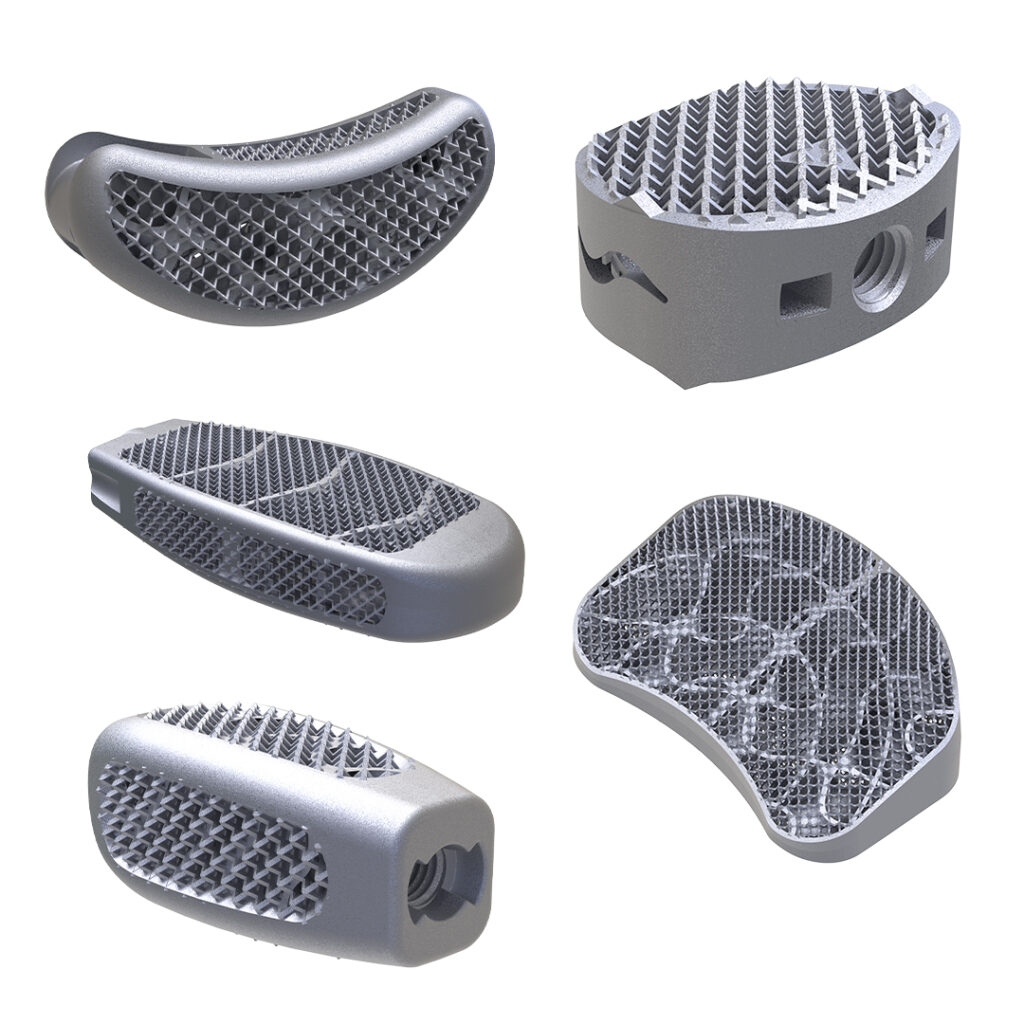
The Tsunami Interbody Fusion devices are designed to provide strong primary fixation and long term integration. Made of Titanium or Tantalum, the cages portfolio accommodates a great variety of procedures to address unique patients need.
Ultimate Versatility
ALIF and LLIF solutions provide large-footprint grafting, ensuring superior endplate coverage and optimized fusion environments.
Streamlined posterior workflow with a versatile platform designed for both bilateral PLIF and unilateral TLIF approaches.
ACDF systems are engineered to restore cervical lordosis and foraminal height through low-profile, integrated fixation.
Built-in Fixation Design
The range of cages with built-in pins contributes to further enhance primary fixation, yet guaranteed by the proprietary geometrical structure.
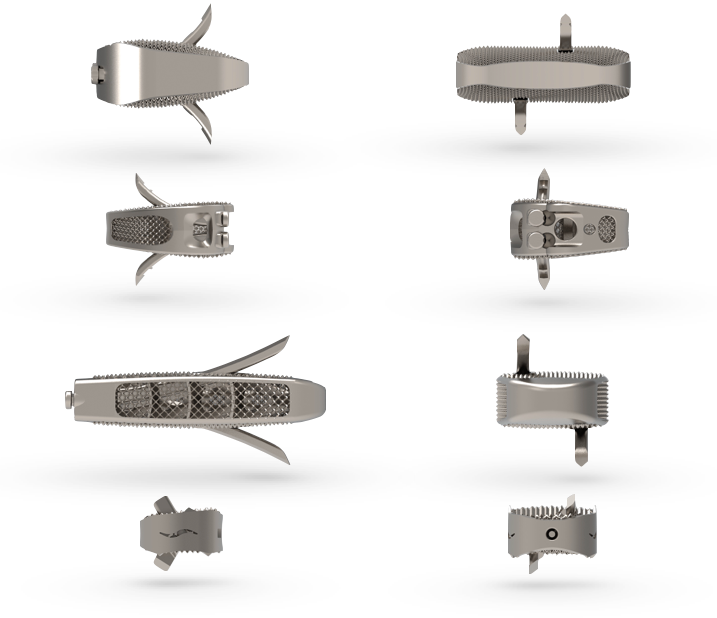
Unique geometrical implant design
Both Titanium and Tantalum cages share a high-tech DNA :
- Bone InGrowth Technology – Microporous surfaces designed to promote bone deposition and maturatio
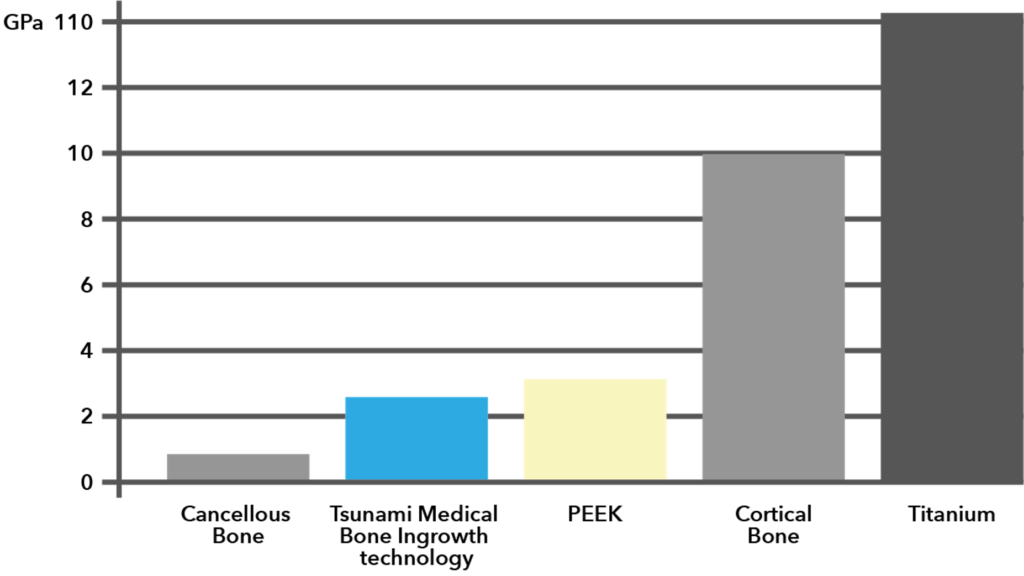
- Smart Biomechanics – Rigidity close to natural bone for a more physiological biomechanical response
- Ultimate Versatility – A comprehensive portfolio tailored to different anatomies and surgical approacheshes
Bone InGrowth Technology
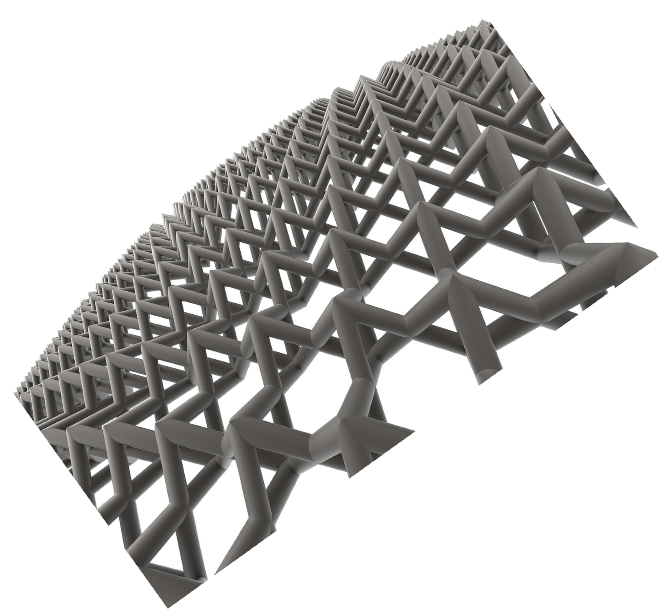
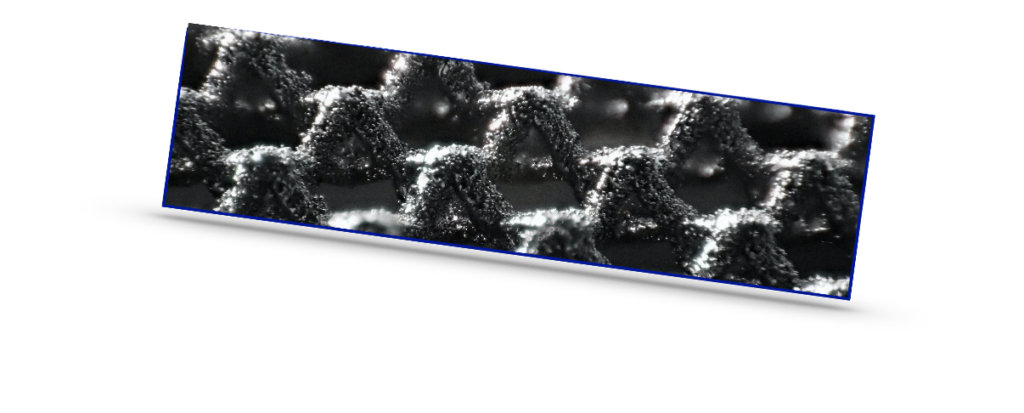
Microporous surface : increase osteoblastic cells adhesion , proliferation, differentiation, and mineralization on the implant surface.
Strong primary stability: rough cage surface, formed by pores in a pyramidal structure enhances cage fit and intervetebral stability. Large contact surface actively contributes to anti-migration capacity.
Smart Biomechanics
Elastic modulus close to natural bone provide physiological like response. Moreover, the physiological forces are distributed across the entire contact surface of the implant, resulting in microelastic deformation, promoting fusion consolidation and reducing the risk of failure.
Unique Antibacterial Features
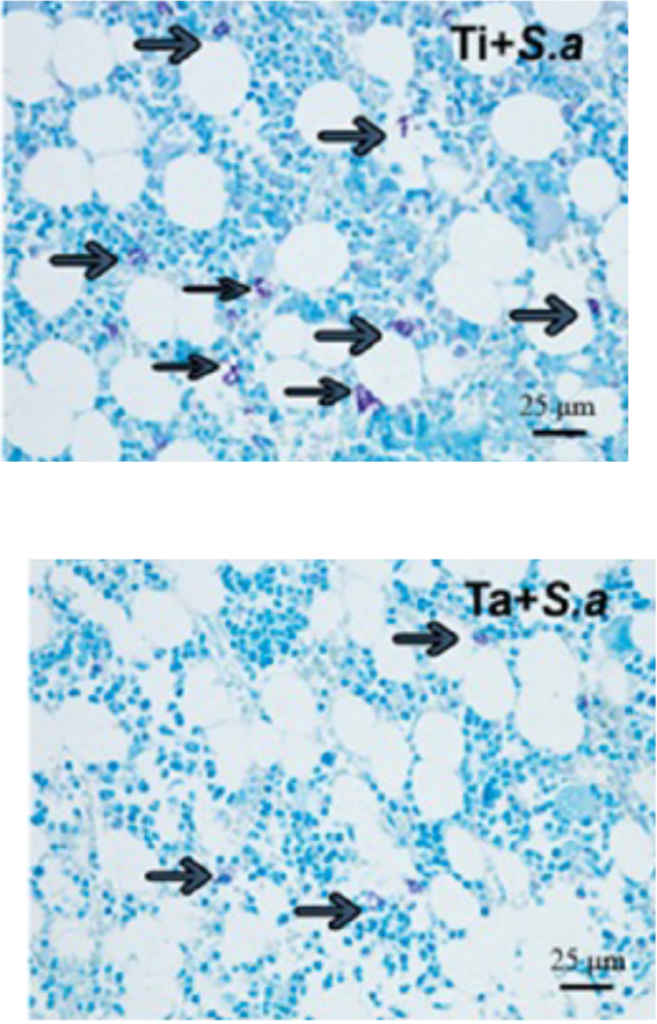
Tantalum may offer a unique biological advantage in the fight against bacterial adhesion. Studies have reported lower adhesion versus some commonly used implant materials.
Research also suggests that cells attach quickly to Tantalum, potentially limiting bacteria persistence or helping to clear them through the natural cycle of cellular turnover
Giemsa staining revals lower bacteria colonies (black arrow) in Tantalum implants vs Titanium ones*
Why is tantalum less susceptible to bacterial infections? Chen, X.; Bi, Y.; Huang, M.; Cao, H.; Qin, HJ Funct. Biomaterials. 2022, 13, 264. https://doi.org/10.3390/jfb13040264
The Tsunami Interbody Fusion devices are manifactured by Tsunami Medical S.r.l. and AMS Group has the Italian Distribution Rights for Titanium and Exclusive Italian Distribution Rights for Tantalum